Tuesday, March 30, 2010
Brand Names Of Computer
In this school year 2009/2010 it was proposed by our art teacher Elizabeth Lombardi, to participate in the competition: ilnostropaesaggio.it. Our project is in defending the importance of culture environment within Jesi.
Once you have decided to participate in this contest proposed by the FAI, we attivati.Prima of all, we downloaded the regulation then we read in class during an assembly to better understand the work to be done.
The following month, compare again, we have proposed a number of sites on which to operate, among all the ideas, the majority voted for the proposed redevelopment of Tabano (circular route passing by Montesecco, street and road Acquasanta Tabano, exploit athletes for their training).
The final project is to place three panels each 2.2 km across length (approximately 6.5 km) to signal the position of the athlete and to provide information on flora and fauna, all of which will be built with materials that do not pollute the landscape.
04/12/2009L 'Ye Xiaoou student has met the Deputy Mayor Stefano Tonelli in town to determine the date of a subsequent interview.
10/12/2009I two class representatives, Peter and Elizabeth Montesi Ceppi, went to town to meet with advisors and Lucio Rossi Federica Befera, our project was granted and there are also some models were shown for panels .
03/02/2010Per see exactly all the way, Strains and pupils Peter Francis Biondini have taken several photos so you can select.
16/02/2010 strains Peter and Elizabeth Montesi have begun the creation of this blog, which will then be updated periodically by the class.
17/02/2010In this assembly we have displayed the photos taken before and after choosing the best one we have selected to put in as background blog.Contemporaneamente, according to the organization, we were divided into groups for managing the various activities to play:
-panel design and measurements [Bravi Matteo, Gabriele Pierantonelli]
-air quality of the town of Jesi [Paciarotti Marco, Ye Xiaoou]
-wildlife [Borocci Matthew Michele Morici, Blacks James, Michele Ughi]
-flora [Francesco Biondini, Giacani Luke, Thomas Rist];
-hand experience on the cultivation [Bellocchi Anna, Mari Isabella]
-operation for the blog [Calamante Maria Vittoria, Greta Coltorti, Frittelli Alessandra Gallo Monica];
-translation of the blog in English [of Norsca Serena, Serena Santacroce, Simonetti Clarissa, Alice Zannotti]
-translation of the blog in Chinese [Ye Xiaoou]
-coordination of [ Peter Vines, Elizabeth Montesi].
25/03/10
Pupils Elizabeth Montesi and Xiaoou Ye went to town for a second official meeting. Here's were taken past agreements in order to make it as fast as possible the practical realization of the panels.
30/03/10
Pupils Francesco Biondini, Peter Ceppi, Thomas Rist and Xiaoou Ye have contributed to a final review of the interventions of the blog.
08/04/10
third and last events in the municipality to define the last details
11/04/10
date scheduled for the end processing of the panels
16/04/10
inauguration of the course by invitation the various municipal authorities
Fake Community Service School
The choice made by a class group refers to a natural appreciated and accepted for their unique needs, understood as well enjoyed by the community, for its hilly landscape typical of the area of \u200b\u200bJesi, even with its typical characteristics of plants, animals, farming practices, economic and social. Well
natural, therefore, not imply that natural beauty and aesthetic connotations that would reduce subjective "nature and landscape in the landscape mood" (A. Cederna, The destruction of nature in Italy, Torino, Einaudi, 1975 ).
It should be an awareness of the value of its landscape and its contents to the enhancement, protection and preservation thereof.
Participation in the competition allowed students to:
· acquire and interpret information;
· identify links and relationships;
· Solve problems;
· use different languages \u200b\u200band media;
· understanding the customs, habits of daily living in comparison with his own personal experience;
· Analyze, compare, communicate data through the consultation of books or media
· act independently and responsibly through a training program that has seen a major element in the collaboration;
• Make sure the results. Then apply the
the method of design adopted for the solution of practical problems, has led to increasing knowledge that, combined with skill, has disclosed personal and social skills to work. The teacher
Elizabeth Lombardi
Sand Rail Design Plans
We made the plans of the three panels to be installed along the percorso.Ecco below links to view:
1) sign the first draft (first part): http://www . megaupload.com /? 0USFKTKF
d = 2) project first sign (second part): http://www.megaupload.com/?d=5Q97ZU8F
3) project the second sign (first part): http://www.megaupload.com/?d=YY8JYMFC
4) project the second sign (second part): http://www.megaupload.com/?d=L79QQWI1
5) second sign project (part three): http://www.megaupload.com/? d = GGS5UVLT
6) project according to the cartel (Part Four): http://www.megaupload.com/?d=K569YNBM
7) project third sign: http://www.megaupload.com/? d = ECEIUKGA
NB. If you can not to open the projects for the panels through the links presented you should do so through the following that refer to another site:
1) https: / / xof6ag.bay.livefilestore.com/y1mZYL3UjGmsDwasYZmtQyVpzcmMWwtjcFCHZta_KvCYcCEgVJxwcc0TxVjoywn5ihCol-khJzNjQ6JTfnOEvgS-JKq0FvtnLII2bva7DOwQfudPG7GlJDHnYayWj3IuCBiGr7LUSPwcRqxYIeWWVaM %% -A/PROGETTO 20cartello 201.1.doc
2)
https: / / xof6ag.bay.livefilestore.com/y1mdDDwOKlZmgCXtydT0mE-7Aor8ZQOuHl8xQQRUQWvzM9ZXtwSJ6iz2rnrlHFo9mYSbkgpIQgCh2yw83QB9P_BGo5rKW2Z0X05qvpvH76U4SEmY8yn9wbxnHavkntJYEy5SWl_MaN04Ml3QANDC7CvQw/PROGETTO 20cartello% 3% 201.2.doc
https: / / xof6ag.bay %% .livefilestore.com/y1mE9KG0GBT5DndFoXtqPtOeOiy2iHapXhJCmCPpm0S5oR4YIe4aVBPup4AcxWAbkoWOk8ZYse0Q8AU44_HElKbi7tTquvaVktajZ3ti9lfe9NKhG1GLdTWoJQJsLo0n9aXDHAu8GZuHehCeVU9hrfThw/PROGETTO 20cartello 202.1.doc
4) https://xof6ag.bay.livefilestore.com/y1mVDhD_jbVJgq5eRfwx3eVgz8SsxNBDJPtghZ5kBBO2x2ypbqBuWf0qR8c7KFRfk95aUwTNJFxo3PbU7vQthB4TJCw8WDfEooLVdT0r2nZuOl01n5sxS8pCs8-HKOtt_HiNM4fKY-4yAwHecp4xqQwcQ/PROGETTO%20cartello%202.2.doc
5) https://xof6ag.bay.livefilestore.com/y1m3cI50FEYQnizkEe7CEFuiIVGo6J3a9sBm1aXBwFAkhWxkr6FGSG3XXt48oSLOgFZQznPOdplUU7qMf0_CusGVFXjP9tYXC9DEI-M6A9j4ceVqRY0Y-Cy1VlZCNAqCAPm7H8soVTDWfujbVVxlX_I-g/PROGETTO%20cartello%202.3.doc
6) https://xof6ag.bay.livefilestore.com/y1mf-FtLIGZWhh-yqC2sqteSd3rU5Wc5u0xYrZEvQW17_ybn3C5B7GOFTp5aX8mmua4eGQU6HKOFgFg-beT9n9EOzdr9HtDDFugqVBqFyuE_zmgpTkL-OmALPuKos8U-WezPemV-Xil2OTIz38JrkO3OQ/PROGETTO%20cartello%202.4.doc
7) https: / / xof6ag.bay.livefilestore.com/y1mZELopktKckfInAFniNT_n_v8TgX4rfAMHpjb4cYVwplCD7or8sDTgGxNE2p_zPdhfU30Y6dwYJ_lxheCpFwXM35cvf8xNT1ewb5nsdO6-_jYhfUhN4k38AxOSQKZEJa9SfPpaEXkCCZ6Jy_5VDv8Ww/PROGETTO 20cartello%% 203.doc
Pokemon Heart Gold Rom Anti-freeze Patch
Three panels, which will be placed along the route approximately every 2.2 km, are being design and construction at a local print shop.
The folders contain information on the flora and fauna of the site and a map where it is reported the way forward.
The Municipality of Jesi has taken steps to finance the cost of the signs.
Though most of the materials needed for the implementation of the panels are already available to the municipality, they will be completed by 16/04/2010, the date of opening of the route with a marathon class.
Paint Color Chart From Berger Gloss Paints
The genus Quercus comprises many species of wild trees in Italy. In many cases the habit is impressive even though there are shrubs. The leaves are alternate, sometimes lobed, sometimes toothed on the same plant can have different forms, for the difference in the juvenile than adult foliage.
The oaks are monoecious plants, or the same plant carries both male and female flowers. The male flowers are grouped in yellow catkins, the female are green. The fruit is the acorn, a dome formed by the scales surrounding the base of the nut.
belong to the genus approximately 450 species of hardy plants, deciduous or evergreen. The first species of oak appeared on Earth during the Cenozoic.
There are several types of oaks:
• Quercus ilex, holm or holm oak. Majestic evergreen tree, typical of Mediterranean areas, or even submediterranean less torrid. It can grow under optimum conditions the 20-30 m in height and can be found from coastal spots up in the mountains (Mount Etna up to 1800 m).
• Quercus petraea, oak. Large deciduous species, habit regular and very dense foliage. Common in all regions of Italy (Except in Sardinia).
• Quercus pubescens, downy. The most widespread species in Italy, absent only in the Po Valley and other floodplains. Very hardy species, the northern areas still prefer areas protected from the cold. Deciduous oak (but often keeps the brown leaves in winter) to mid-sized growth is very slow, generally live 200-300 years and is a typical west-central Europe. Some specimens can reach very advanced ages: the oak that grows in Tricarico, cave in area, has an estimated age of 612 years, a trunk circumference of 6.43 meters and a height of 20 meters and is inserted in 'list of monuments natural (trees fathers) of the Basilicata region.
• Quercus robur, English oak. Large deciduous oak, more common in northern areas and more rare in the South, mainly differs from oak acorns on long stalks, leaves sessile and more erratic behavior. Q. Some authors consider petraea, Q robur and Q. pubescens as three subspecies or varieties of one species. Quercus
Sub Section Mesobalanus. Similar to previous styles long, acorns mature in 6 months, sweet or slightly bitter, inside of the dome of hairless acorn. • Quercus
frainetto, farnetto. Fast-growing deciduous species, common to Central and South America, has large leaves of the other Italian oaks, deeper lobes and margins parallel.
• Quercus pyrenaica, Pyrenean oak. Deciduous species with leaves deep green and deep, narrow lobes and is situated in warmer areas of Piedmont. Sub
Quercus cerris section. Styles long, acorns mature in 18 months, very bitter, inside of the dome of the acorn hairless or slightly hairy. • calliprinos
Quercus, oak Palestine. Evergreen small tree similar to Q coccifera but taller and with hairs on the male catkins and young branches. In Italy there is in Basilicata, Puglia and Sicily in the south of
• Quercus cerris, turkey oak. And fast-growing deciduous species, native to the regions South-Eastern Europe, but also widespread in Italy, is a majestic plant from the crown ovoid, very decorative, wood is not particularly valuable.
• Quercus coccifera, oaks. Widespread only in Western Liguria, Sicily and Sardinia, evergreen shrub to (not exceeding 2 m in height).
• Quercus suber, cork oak. Evergreen species that look similar to oak, but is botanically closer to the turkey. Little tolerance to the cold and especially prefer the Tyrrhenian coast of Sardinia, the bark is characteristic and covers both the trunk and major branches; periodically barking the trunk, cork is obtained that reform after some time. • Quercus
trojan, fragno. Semisempreverde and shrub species common only in Salento and in Basilicata.
12 Dpo Cervix Soft And Low
The European chestnut (Castanea sativa Miller), in Italy most commonly called chestnut is a deciduous tree in the family Fagaceae. The species is the only native of the genus Castanea in Europe, but in recent decades has often been introduced for reasons phytopathological, the Japanese chestnut (Castanea crenata). The populations in Europe are therefore mainly related to European chestnut seedlings or grafted on Japanese or European chestnut hybrids of the two species. The chestnut is one of the most important forest species in southern Europe, as it has had, since ancient times, the interest of man for many uses. Besides the intrinsic interest in the ecological aspect, this species has been widely cultivated, up to a wider range, for the production of timber and fruit. The latter, in the past has been an important food source for the rural areas of mountain forest and hills, as the chestnuts were used mainly for the production of flour. The economic importance of the chestnut has now undergone a drastic downsizing: the fruit crop is now limited varieties of high quality and the production of wood for building was markedly reduced. Very marginal, finally, is the use of chestnuts for the production of flour, which has a minor use in the confectionery industry. It is believed that most of the chestnut forest cover were a result of renaturation of old abandoned plantations over time, while the cultivation has been reduced more favorable to the stations, where you can get the best characteristics of the product, including timber. The chestnut tree is a plant-limbed, with expanded, rounded crown height and variable, depending on conditions, from 10 to 30 meters. Under normal development of a large columnar trunk, with bark smooth, shiny, brownish-gray. The bark of the branches is white and is covered with transverse lenticels. Over the years, the bark cracks longitudinalmente.Le leaves are alternate, provided with a short stalk and, behind this, two stipules oblong. The foil is great, even up to 20-22 cm long and wide up to 10 cm, lanceolate, acuminate apex and serrated in the margin, with sharp teeth and regularly located. The young leaves are hairy, but fully developed are hairless, shiny and leathery texture. The flowers are unisexual, on the same plant. The male flowers are grouped in small clusters in turn forming catkins erect, 5-15 cm long, issued at the leaf axil. Each flower is white, features a perigonium divided into 6 lobes and an androecium of 6-15 stamens. The female flowers are single or in groups of 2-3. Each group is surrounded by a sheath of bracts that cupola.Il fruit is an achene, commonly called chestnut, with pericarp cuoiosa consistency and brown, glabrous and shiny on the outside, tomentose inside. The shape is more or less spherical, with one side flattened, said belly, and a convex, called back. The apical pole ends in a small prolongation fringed, said the torch, while the proximal pole, called the hilum, is slightly flattened and gray. The streaks are back more or less marked, particularly in the variety of the group of brown. These morphological features are important for recognition of the variety. The chestnut is a mesophilic and moderately demanding species in moisture. It supports quite well the cold winter, suffering damage only at temperatures below -25 ° C, but becomes demanding during the growing season. For this reason, the chestnut has a late vegetative growth, with bud and bloom in late spring to early summer. In order to complete the cycle of fruiting, the good weather should last almost four months. In general, these conditions occur in the plane of the submontane regions Mediterranean or low hill to the north. Under favorable moisture can also be grown in fresh Lauretum stations, going so at lower altitudes. Moderate summer drought conditions cause a slowdown in the vegetative half of the season and irregular fruiting. The persistent fog and excessive rainfall during June and July hinder pollination has negative repercussions on the early stages fruttificazione.Nelle tolerate moderate shade, done this, that promotes good regeneration in the forests mature, but in production shows a eliofilia.A more moderate face of climatic requirements, the chestnut has considerable needs soil, so its distribution is closely related to the geology of the area. Under the chemical and nutritional aspects, the species prefers well-endowed land of potassium and phosphorus and humus. Optimal conditions occur in neutral or moderately acidic soils, adapts well to push more acidity, while generally shuns the basic soils, as limestone is moderately tolerated in humid climates. From the point of grain size tend to prefer loose or loose soils, while clay soils are not tolerated, or at least prone to ponding. In general are preferred soils derived from volcanic rocks (tuffs, trachytes, andesites, etc..), But grows well in acidic soils typically derived from granite, sandstone, quartz, etc.., which are sufficiently endowed with humus. The limestone soils are tolerated only in the northernmost stations, moderate rain, while the marls are poorly tolerated.
Bubbles In Belly When Pregnant
Fennel (Foeniculum vulgare Mill.) Is a Mediterranean herb of the family Apiaceae (Umbelliferae).
Known since antiquity for its aroma, its horticultural cultivation seems to date back to 1500. They are distinguished from varieties of fennel variety of vegetable crops (sweet). The fennel is a wild plant, perennial, branched from the stem, up to 2m high. It has leaves that resemble hay (hence the name Foeniculum), green in summer and produces umbels of small yellow flowers. Here are the fruits (achenes), then the first green and grayish. Of using fennel shoots, leaves, flowers and fruits (incorrectly called "seeds"). Fennel grown (or sweet) is an annual or biennial plant with tap root. Reaches 60-80 cm in height. It consumes large white sheath that develops in the heart may base.Il Fennel is widely cultivated in gardens for the production of the heart may, a compact the set of leaf sheaths, which appear white, fleshy, closely adpressed to each other around a short conical stem directly at ground level. The collection of Grumolo occurs in all seasons, according to the production areas. It adapts to any soil of medium texture with the presence of organic matter. The plants are arranged in rows and spaced about 25 cm apart. The collection of the heart may occur after about 90 days after sowing. It requires frequent and abundant irrigation and prefers a temperate Mediterranean type. The collection is the flower of the fennel in Italy as soon as the flower is "open", normally from mid-August until late September. The flower can be used fresh or can be dried outdoors, in the light, but away from direct sunlight, which would evaporate the essential oils. The diacheni you can pick up early autumn when the transformation took place the flower in the fruit. The "beards" or leaves and tender shoots can be detected from spring to autumn.
Running Shoes For High Arches Narrow Feet
Urtica dioica or stinging nettle is a herbaceous angiosperm dicotiledone.Alta up to 200 cm, prefers damp, rich in nitrogen, preferably shady. Large ovate leaves and opposite, lance-shaped, serrated and sharp. The female flowers are collected in the ear long before it, and are green, while the male flowers are grouped in erect spikes. It blooms from May to October. Leaves and stems are covered with trichomes (Hairs) that contain a substance irritating. When you touch the plant, the apex of the hair is broken and leaking a liquid irritant formed mainly by acetylcholine, histamine, serotonin and probably acid formico.Come the name suggests, the Urtica dioica is a dioecious plant, ie that there are plants that bear only female flowers and plants that bear only flowers maschili.Ricca of vitamin C, iron and nitrogen, can be used as food: the seeds in rice, in soups, in omelettes or even used to frittelle.Viene capelli.Utilizzata stop the fall of the ancient Greeks as a medicinal plant with anti-diarrheal properties, diuretic, cardiotonic and antianemic, employed in the Middle Ages fresh to treat, with the poison of his stinging hairs, gout and rheumatism. It was also beaten and weakened to weave fabrics (ramie) similar to hemp or lino.L 'nettle, thanks to the chlorophyll present in large amounts, can serve as a dye for delicate fabrics: leaves tinged with green, while the roots of yellow .
Chanel At Woodbury Any Good?
The olive or olive bitter due to the polyphenol content, the use of olive oil in, however, requires specific treatments aimed at debittering, made with various methods. The olive tree belongs to the family of Oleaceae. The plant begins to bear fruit to the 3rd-4th year, began full production at the 9 th -10 th year maturity is reached after 50 years. It is a plant long-lived: the weather is good an olive tree can live a thousand years. In the Middle East, has been used since antiquity for food. Its fruits, olives are used for oil extraction and to a lesser extent, for direct use in food. Because of the sap king never go beyond the 60-100 cm profondità .Il stem is cylindrical and twisted, with bark gray or dark gray, wood is very hard and heavy. The stump form globular structures, called Caesar, which are issued Each year numerous basal shoots. The tree has a conical shape with pendulous branches bearing or licenses (the latter placed the barrel) according to the varietà .È an evergreen plant, whose activity is almost continuous dimming in winter. The leaves are leathery, simple, entire, elliptic-lanceolate, with short petiole and margin entire, often revolute. The underside is white-tomentose. The buds are mostly type ascellare.Il flower is hermaphrodite, small, with 4 cup of white petals and sepals. The flowers are grouped in numbers of 10-15 flowers in cluster, called pinkie, issued at the leaf axil of the branches of the previous year. The mignolatura begins around March-April. The bloom itself is, according to the cultivar and the areas from May to the first half of giugno.Il fruit is a drupe globose, ovoid or ellipsoid, sometimes asymmetric, weighing 1.6 grams, depending on the variety, the technique cultivation practices and the development climatico.Fra plants the tree Olea europaea is distinguished by its longevity and frugality. The olive tree is a species typically thermophilic and eliofila, with strong characters xerophilous. On the other hand is sensitive to low temperatures. In Italy the distribution area of \u200b\u200bthe sub-spontaneous vegetation, the olive, is the hot sub Lauretum. The olive (also known as wild olive) is one of the essences most representative blot termoxerofila (Oleo-Ceratonion), as it becomes more sporadic in the Mediterranean Quercion ilicis. For the characters of frugality and heliophilous is found frequently even in degraded spots in scrubland and rocky vegetation along the coasts. Good resistance to grazing because it tends to assume a bushy habit and dense branching with a pulvinus spinescente. Resist well fires for the remarkable ability to repel ceppaia.Le vigorous shoots from the climatic requirements are considerable. Being a plant suffers eliofila shading, producing a loose vegetation and, especially, poor flowering. The climatic factor determining the distribution Olive is the temperature: the plant shows signs of suffering in temperatures of 3-4 ° C. Below these temperatures, the tips of the buds dry up. In general, sensitivity to cold increases from stump to the stem, branches, the buds, leaves, the shoot tip, and finally to flowers and fruitlets. The frost can damage the wood at temperatures of -7 ° C. The severe frosts can cause the death of the entire apparatus of the only plane with survival ceppaia.Per regard to the other climatic factors are detrimental to the strong wind, especially when combined with low temperatures, excessive rainfall and high humidity of ' air. (Olea europaea L.) is a fruit plant.
Sony Vesa Mount Screw Size
The vine (Vitis L.) is a genus of shrubs of the family Vitaceae. The grapes of Vitis labrusca
, and its hybrids with Vitis vinifera, and it can be vinified wines are like strawberries (strawberry flavored) or Clinton, who until a few years ago were local products of the North-East Italy. The correction of these characteristics on the one hand with practice procedures which seek to limit how far as possible, and later with additions such as zuccheratura (addition of sugar or molasses) or other markers and additives, not provided for vinifera . On the other hand, the same United States and Australia are clearly different between their high quality wines originating from grapes of Vitis vinifera, which are among the largest producers worldwide, and wines produced from vines marginally native American or hybrid. Nevertheless, in special trading conditions in the absence of reasonable alternatives to the climate, the Americans or the hybrid varieties are grown for wine making with some success in several countries like the United States, Canada, New Zealand and Switzerland. In Switzerland, given the natural resistance of different species or hybrids of vinifera pest (especially cryptogams) went on the climate, the vines interspecific hybrids Americans or American vines, the vines have become the home to agriculture organic farming; between the screw and a plant to grow that tree climber clings to the supports (braces) by the tendrils, and if the plant is not pruned can reach great heights clinging to trees, has a well developed root system, which can overcome the 10-meter drum is divided into lunghezza.Il strain (few decimentri immediately above the ground), under the branches (the first branches that radiate from the trunk) and branches that are branches of one or two years.The leaves , these vines, palminervie, alternatives are simple and consist of five main lobes more or less blended with heart-shaped at the base. I am an important diagnostic character for the recognition of varieties cultivation of the vine (Vitis vinifera sativa). The flowers are very small, greenish flowers and clustered in a raceme. The wild vine is dioecious (ie, with unisexual flowers taken from different individuals), the cultivated varieties have been selected to bring flowers hermaphrodite. The flowers have both calyx and corolla of 5 pieces. The chalice, after fertilization, can remain in the fruit, forming a rim around the pedicel of each berry. The petals of the corolla are welded at the top. The gynoecium consists of two carpels leads and 4 eggs. The stamens are 5 alternating with nectar.
The fruits are berries (grapes) in shape and vary in color: white, yellow, purple or blacks, grouped in clusters. Have an often pruinose exocarp (peel), mesocarp cell filled with a juice from which we get the must (pulp) and an endocarp composed of a layer of cells enclosing loggias containing the seeds (pips).
My Bitches Nipples Are Enlarged Is She Pregnant
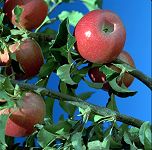
The apple (Malus domestica, Borkh. 1760) is a fruit plant in the family Rosaceae. It is one of the most common fruit trees coltivate.Il apple is a small deciduous tree of 5-12 meters in height, with a dense canopy and root system and expanded superficiale.Le leaves are alternate and simple, oval plate, with acute apex and rounded base, 5-12 cm long and 3-6 cm wide, glabrous and top with some tomentosità beneath. The petiole is long cm.I 2-5 hermaphrodite flowers are white, pinkish-white externally and internally symmetric pentamer. They corolla composed of 5 petals and are 2.5-3.5 cm wide, and inferior ovary. They are combined to corymb inflorescences, the number of 3-7. Flowering takes place in the spring, the buds simultaneously. Pollination is entomofila.Il fruit, apple said, is formed by growth of the floral receptacle with the ovary and is therefore a false fruit, globular in shape, usually 5-9 cm in diameter, the first green and ripe, summer- autumn color from yellow-green to red. The true result, derived from much of the ovary is actually made up of the core, more consistency than the polpa.Il leathery pericarp contains five carpels arranged as a five-pointed star, each carpel The apple tree is suffering from various diseases caused by fungi, including scab, powdery mildew, the jewelry, cancer of the pome fruit and root rot woolly. Among insects, the most important are the mealybug S. Jose (Quadraspidiotus perniciosus), the gray aphid (Dysaphis plantaginea) and Cydia pomonella moths, Orgyia antiqua and Cossus Cossus.
Tazorac And Moisturizers
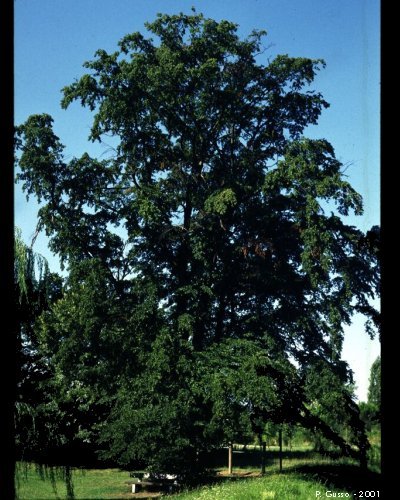
the hornbeam (Carpinus betulus L.) is a tree of the family Betulaceae, subfamily Coryloideae, widespread in Western Europe. The hornbeam tree is a short-lived (150 years), medium height (15-20 m), straight hair and allungata.Le leaves are oval, pointed to the margin doubly serrate, during the autumn, before falling to ground stain bright yellow tending to orange. The flowers are unisexual, in inflorescences (catkins) and also porat unisexual on the same individual (monoecious species). Individual male flowers are naked with 6-12 stamens taken individually for each bract. The single flowers have perigonium women and are worn in pairs on a series of bracts and bratteole that the fruit will become triloba a bract, typical of specie.Il fruit is an achene which contains a seed alato.Produce not a heavy wood, hard but not very durable especially when exposed to moist, pale in color and is used for small objects such as pins , spoke wheels and gears and as a great combustibile.Da ecological point of view, the species can tolerate some shade and requires relatively high temperatures, but is demanding on the ground. And improving the land and has a remarkable ability pollonifera. The hornbeam has a wide distribution in Central Europe with the limits to the Pyrenees and Wales. In Italy is mountainous horizon with frequency up to 900-1000 m as a constituent of the woods along with mesophilic deciduous oaks and beech. In plain English Oak is set to be in the lowland forests. It is also present in the colder areas and wetlands of the Po Valley. Missing in the islands. It is used for hedges, coppices to produce firewood for city trees and as ornamental tree in parks and gardens.
Mysore Mallige Blue Flime
The horse chestnut and horse chestnut tree is widely used as an ornamental plant in the roads or as isolation. Creates a very large and dense shadow. The Horse Chestnut can reach 25 to 30 meters in height; presents an elegant and imposing bearing tree. The foliage is expanded, reaching 80-10 meters in diameter also remaining very compact. The look is rounded or pyramid, because of their lower branches horizontally. The branches are lenticels, have large buds opposite, reddish, and a large terminal, coated with a sticky substance. The bark is smooth and brown and flaky with age. Dell'ippocastano The leaves are deciduous, palmate-seven, with insertion opposite, with a stem of 10-15 cm, on twigs or greenish brown, slightly pubescent. Each leaf, which can reach over 20 cm in length, consists of 5-7 laminae obovate with acuminate apex and narrow base. The margin is doubly serrate, rib is well marked. The stalk has no stipules, but a wide base and a crack that runs through it. The leaves are bright green on the upper side and light green with a slight tomentosità on the ribs, and below. The plant has hermaphrodite flowers with bilateral symmetry, consisting of a small cup to 5 lobes and a corolla with 5 petals white, often stained yellow or pink in the center. The flowers are grouped in panicle inflorescence large (up to 20 cm in size and 50 flowers). Flowering takes place during the months of April-May. The fruits are large and round greenish capsule, equipped with short spines, which start in three valves and containing a large seed or even more shiny brown seeds that take the name of Chestnut crazy. They taste bitter and develop a very unpleasant smell during cooking. Long-lived and rustic, tolerates low temperatures and has no particular requirements in terms of soil, even if it grows best in fertile soil. It is not very resistant to soil salinity and air pollutants, which reacts with reddening of leaf margins and premature leaf desiccation.
Cheats In Pokemon Deluge In Pc
The walnut (Juglans regia L.) is a plant native to Asia (Himalayan), introduced in Europe in ancient times for its edible fruit.
spread throughout the world, in Italy the walnut growing fruit, usually promiscuous, has some relevance only in Campania.
The walnut can be grown for timber production or for both purposes. The walnut tree is vigorous, with its solid trunk, tall, straight, majestic bearing, has strong roots and taproot.
The leaves are deciduous, compound, alternate (consisting of 5-7-9 and, more rarely, 11 leaves).
is a monoecious plant where the male flowers are grouped in catkins pendulous, 10-15 cm long, with numerous stamens, which appear on the branches of the previous year before the leaves appear.
Flowers unisexual female hatch gems mixed after the men's (proterandria), are solitary or in groups of 2-3, 4 rarely appear on the new shoots of the year, while the leaves. The fruit is a drupe, consisting dall'esocarpo (husk) fleshy, fibrous, black at maturity and releases the woody endocarp, which is the nut itself, consists of two shells that enclose the nut, with a high lipid content. Limits
soil and climate: sensitive to stagnant water and water stress resulting from loose soil, does not tolerate heavy soils, asphyxiated, and can withstand even high calcium content. Keep from excess heat (hot and cold).
Cheats In Pokemon Deluge Legendary
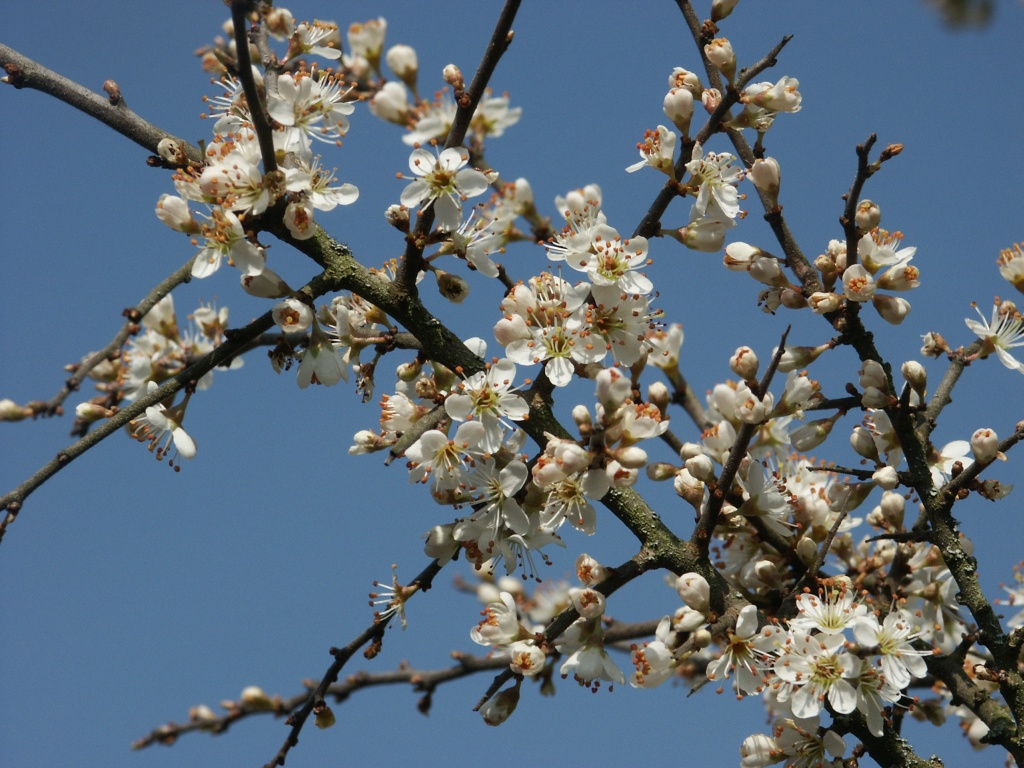
deciduous tree with leaves up to 10 m. globular crown with expanded green vivo. Trunk erect, sinuous, soon branched with reddish-brown bark, fissured opaque in adult plants (thorny branches in wild plants). They alternate with segments oblamceolata, base cuneata and finely serrated margin. The upper surface is dull and dark green, the lighter and less pubescent. Are isolated or in groups of 2-3, white, flowering precedes the development of the leaves. The fruit is a drupe oval with smooth skin and waxy, which can vary in color from yellow to red-purple. Commonly cultivated species, grows feral in the woods and uncultivated and barren from 0 to 1500 m high.
Personal License Plate Availability Ontario
The pear (Pyrus, Linnaeus 1753) is a genus of plants in the Rosaceae family, including species of trees and flowering shrubs with delicate and variously colored. They are medium-sized tree, reaching 10-17 meters. Most of Pyrus are deciduous, but one or two species in Southeast Asia are sempreverdi.Le leaves are about 2-12 cm long, glossy green in some species, silvery-hairy in others, the shape of the leaves varies Oval to lanceolate stretto.I flowers are yellow or pink and white rarely stained, 2-4 cm in diameter and have five petals. Bloom between April and May, up to an altitude of 1,000 metri.Il pear fruit is called, is as big as apple, with a diameter of 1-4 cm, but in some cultivated forms is up to 18 cm long and 8 wide. Pears are native to temperate regions of the Old World, Western Europe and North Africa to Asia.
Most species tolerate the bitter cold, with temperatures between -25 and -40 C ° C ° in winter, but evergreen species, which only tolerate temperatures down to -15 C °.
How Much Does A Headstone Costs?
Magnolia is a genus of plants of the family Magnoliaceae. It includes over 80 species of trees and shrubs to slow growth, but in some species such as Magnolia campbelli Magnolia officinalis and may exceed 20 m in height, with interesting flowers, native to North and Central America, Asia and the Himalayas.
The genus name was given by Charles Plumier in honor of Pierre Magnol 1638-1715 French physician and botanist, director of the botanical garden of Montpellier, who introduced the concept of family in botanical classification.
The Magnolia leaves are alternate, oval or elliptical, generally large and leathery, perennial or deciduous, flowers solitary, large, generally cup-shaped, with perianth consists of 6-9 petals petaloids (undifferentiated petals and sepals), stamens numerous are laminated, the carpels are arranged on the receptacle cone, a flower is considered by botanists primitive, so that wrong for a long time it was considered Magnoliaceae that they were the first angiosperms appeared on earth (the oldest fossil of this family dates back 95 million years ago). The fruits are ovoid in
infructescenses cones contain seeds shiny red or orange.
Do Herpes Have Hair In The Middle
How To Connect A Ceiling Fan Regulator
Wednesday, March 24, 2010
Dresden Lace Porcelain Figurines
Montesecco The area is characterized a considerable amount of wildlife, there are few typical species. As for mammals, most of them is present in this place due to the influence of man:
- Agriculture
- Hunting
-Reintroduction of animals to other areas
-Construction of residential houses and gardens
As for the birds, it is affected by the migration of most species of central Italy.
The mammals include:
-boar
- wild rabbits
-fox
- hare
- rate
-marten
-weasels
- the hedgehog
-rat
-l 'porcupine
- roe (reintroduced in the villas)
- the weasel
-shrews
the blind mole-
- different types of pets.
This area is also characterized by the presence the snake (the snake) and grass snake.
Nell'avifauna remember, however, many species that nest or not:
- prey ( owl, barn owl, tawny owl, owls, eagle-eared owl, buzzards, kestrels, harriers )
hedge-birds ( robin, nightingale, cluce, blackbirds, thrushes, tordelli, doves )
-passerines ( larks, sparrows, finches, Serin, swallows, swifts, house martins )
Tuesday, March 16, 2010
Not To Eat If You Have A Gall Bladder Polyps
| Observed in | JESI-VIA AGRARIA (2 km from the landscape we have chosen) |
| station code: | JESI 1 - Murr - E388011887 |
| Address: VIA | AGRICULTURAL |
| COP reference: | JESI |
| Lat (N): | 43.31.58,77 |
| Long (E): | 13.13.08,89 |
| Altitude: 168 meters | |
| start date of activity: | SEPT 2000 |
| Station type: | macroscale |
| Zone Type: Residential-Agricultural | |
| Population density: | |
| type of road (1): | narrow road |
| Traffic intensity (2): | low traffic |
| (1) (2) | broad street / road Narrow / canyon road / highway traffic (> 10000 vehicles / day) average traffic (from 2000 to 10000 vehicles per day) low volume of traffic (<2000> |
| Chemical parameters | Model | Principle analytic |
| Carbon monoxide CO | 11M-LCD ENVIRONNEMENT | IR Correlation Filter |
| Nitrogen oxides | AC-31M LCD ENVIRONNEMENT | Chemilluminescenza |
| Ozone O3 41M-LCD ENVIRONNEMENT | UV Photometry |
| | |
Map 1:2000
Saturday, March 6, 2010
Headstones For Graves Sold In Ontario
because I do not have a valid and reliable candidate to vote for ...
because I am breaking the "lesser evil" ...
because all have a thousand times already proven to be the "cocks his" ...
because I think that in Italy there is democracy ...
because I consider unjust and illegal electoral law ...
because I think it shameful that in a "Democracy" can be the barrier (to 4 %)...
because a democracy is that if every thought has represented ...
because the candidates are chosen as "gatherer of votes and not for their" quality policy "...
because people are ignorant or stupid and I do not want to mingle and be confused with them ...
because the "lesser evil" has always been too bad and I no longer want to endorse with my vote ...
because with the excuse that in politics need to negotiate (FALSO!!) Are all the way to sell ...
because no candidate is worth a tenth of the respect I have for myself ...
smart because they believe (their SI that have figured out how the world works!) And instead in the "chain natural" play the role of fungi or parasites ...
an idiot because I'm not ready to help the "prophet" of the moment that opens the "little factory dementia "in time of need and then forget them when he was elected ...
because I'm not an ass-licker ...
because" I reason, "not" account "...
because dogs (last wretched humanity) and the weak no one ever thought anyone ... not Vendola not Lease, not Berlusconi, D'Alema did not ...
because the left corrupted with my vote stays in place rather than resign and make room for those who deserve ...
(continued)
Tuesday, March 2, 2010
Soapy Taste Pregnancy
(Monia Benini)
In 1987 the Italians in a referendum had already said no to nuclear power very clearly, but despite this, In 2008, the government tramples on the wishes expressed by the citizens, establishing a return to nuclear power in Italy, a few months later, the prime minister an agreement signed with France patently illegal, while ENEL - privatized - no qualms for some time to build nuclear power plants in Eastern Europe with the same technology of the Chernobyl plant, noting that the much vaunted "fourth generation" of plants should wait for decades.
Staying at our national territory, according to the instructions of the Decrees of the Government, we would already have known of the sites where the plants will be located and stored radioactive waste, but the proximity of the appointment with the vote in different regions, not to upset the electorate, it was decided to refer the claim to "better times". Indeed, as if this were to be more quiet, the Secretary for Economic Development Stefano Saglia states that "The route to be set of 'criteria for site identification and protection of public health and the environment," and "by these criteria it can make a map Italy identifying appropriate macro-areas according to the government to host a central, but certainly not to identify a single site. "But what is worse, according to the state Saglia, the precise location of the construction of a" come to knowledge when an operator will ask the government to certify according to the rules this site.
Meanwhile, the media and various characters (not least the prof. Umberto Veronesi) deep their efforts in the sale of "truth" more appropriate to support the big business of the atom: nuclear power is necessary, nuclear power is safe, nuclear power will make Italy independent from the energy point of view, all countries are investing in nuclear power etc. ... Thus, for many people because it says the TV is "reality", we are witnessing a slow but relentless conditioning of the public, increasingly open and available in a choice against both uneconomical and dangerous. As if that were not enough, in many Italian dioceses was sponsored by ENEL distributed materials in support of nuclear hoping that the authorities religious are noticed only after astatine stratagem of SpA, there are extenuating circumstances to the parties that declare themselves in Italy and anti-nuclear push for a new referendum, then voting in favor of pro nuclear decisions at European level.
obvious question then arises: what is the 'affaire nuclear if there is such a race to the Eldorado of the atom? Documents in hand, except for manufacturers / investors are not distorted and fraudulent mechanisms used as already happens for the portion that we pour into our CIP 6 ENEL bills for renewable energy sources and - through the stratagem of the word "comparable" - are distributed to farmers that invest in incinerators, gas turbines and biomass power plants, construction of a nuclear power and the corresponding electricity production is uneconomic.
For twenty years the number of plants in the world is stable (about 440 plants), and the vast majority are older second-generation power plants (such as Chernobyl and Three Mile Island). In Australia, where are located the world's largest deposits of uranium, was never built any nuclear facility. For the annual standard operation of a plant used 160,000 tons of material, which will be reprocessed, so you can get only 160 tons of uranium useful. The 159,840 tons of waste are impregnated of chemicals used for the reprocessing and contain naturally radioactive isotopes. The cost of uranium and plutonium, an exhaustible resource, has grown remarkably, not cheap making supply, that Italy would guarantee depending once again abroad, since they do not have significant reserves of uranium.
Not to mention the danger of these substances, which is very high: for example, simply inhale less than a millionth of a gram of plutonium to develop lung cancer. The half-life of the radioactivity of plutonium is 24,000 years, while uranium-235 has a half life of 704 million years uranium-238 4.5 billion years. They are so ridiculous proposals aimed at solving the problem through their burial waste (land or sea) in reinforced concrete caissons, whose shelf life is due to an order of magnitude of one hundred years.
So why not respond to the "nuclear" with the resources - clean and renewable - which indeed does our country for the production of electricity, which is the only type of energy produced from nuclear power plants? Micro hydro, solar thermal, photovoltaics, wind allowed a good energy supply and greater distribution of production sources. This, together to rethink the pace of our energy consumption and waste on the intervention of our homes and production structures, it could be a response to the needs of citizens in the name of a human welfare and the environment, not subject to cost implications and Return to the risks inherent in the atom.
In 1987 the Italians in a referendum had already said no to nuclear power very clearly, but despite this, in 2008 the government tramples on the will expressed by citizens, setting out a return to nuclear power in Italy, a few months later, the Prime Minister of an agreement signed with France clearly illegal, while ENEL - privatized - you do not scruples for some time to build nuclear power plants in Eastern Europe with the same technology of the Chernobyl plant, noting that the much vaunted "fourth generation" of plants should wait for decades.
Staying at our national territory, according to the instructions of the Decrees of the Government, we would already have known of the sites where the plants will be located and stored radioactive waste, but the proximity of the appointment with the vote in different regions, not to upset the electorate, it was decided to refer the claim to "better times". Indeed, as if this were to be more relaxed, the Secretary for Economic Development states that Stefano Saglia "The course provides for the set of" criteria for site identification and protection of public health and the environment, "and" by these criteria it can make a map of Italy by identifying appropriate macro-areas according to the government to accommodate a central, but certainly not to identify a single site. "But what is worse, according to the state Saglia, the precise location of the construction of a" come to our attention when an operator will ask the government to certify according to This site rules.
Meanwhile the media and various characters (not least the prof. Umberto Veronesi) lavish their efforts in the sale of "truth" more appropriate to support the big business of the atom: nuclear power is necessary, nuclear power is safe, nuclear power will make Italy independent from the energy point of view, all countries are investing in nuclear power, etc. ... Thus, for many people because it says the TV is "reality", we are witnessing a slow but relentless conditioning of the public, increasingly open and available against both uneconomical and risky choice. As if that were not enough, in many Italian dioceses was sponsored by ENEL distributed materials in support of nuclear hoping that religious authorities have noticed only after astatine stratagem of SpA, there are Mitigating for parties in Italy that is anti-nuclear state and push for a new referendum, then voting in favor of pro nuclear decisions at European level.
obvious question then arises: what is the nuclear affair if there is such a race to the Eldorado of the atom? Documents in hand, except for manufacturers / investors are not distorted and fraudulent mechanisms used as already happens for the portion that we pour into our CIP 6 ENEL bills for renewable energy sources and - through the stratagem of the word "comparable" - are distributed to employers who invest in incinerators, gas turbines and biomass power plants, construction of a nuclear power and the respective electricity production is uneconomic.
For twenty years the number of plants in the world is stable (about 440 plants), and the vast majority are older second-generation power plants (such as Chernobyl and Three Mile Island). In Australia, where are located the world's largest deposits of uranium, was never built any nuclear facility. For the annual standard operation of a plant used 160,000 tons of material, which will be reprocessed, so you can get only 160 tons of uranium useful. The 159,840 tons of waste are impregnated with chemicals used for the reprocessing and contain naturally radioactive isotopes. The cost of uranium and plutonium, an exhaustible resource, has grown remarkably, not cheap making supply, that Italy would guarantee depending once again abroad, since they do not have significant reserves of uranium.
Not to mention the danger of these substances, which is very high: for example, simply inhale less than a millionth of a gram of plutonium to develop lung cancer. The half-life of the radioactivity of plutonium is 24,000 years, while uranium-235 has a half life of 704 million years and uranium-238 4.5 billion years. They are so ridiculous proposals aimed at solving the waste problem through their burial (land or sea) in reinforced concrete caissons, whose shelf life is due to an order of magnitude of one hundred years.
So why not respond to the "nuclear" with the resources - clean and renewable - which indeed does our country for the production of electricity, which is the only type of energy produced from nuclear power plants? Micro hydro, solar thermal, photovoltaics, wind allowed a good energy supply and greater distribution of production sources. This, together with a rethink of the rhythms of our energy consumption and waste on the intervention of our homes and production structures, it could be a response to the needs of citizens in the name of a human welfare and the environment, not subject to cost implications and the risks involved in returning to the atom.